
03.7 / MEDIA SOLUTION
AEO/GEO — Help Your Business Become Discoverable in AI Search
Customers increasingly consult ChatGPT Search, Gemini, Perplexity and Google's AI features before choosing a supplier, clinic or partner. Your website should help both people and AI-powered systems understand who your business is, which problems it solves, which claims can be verified and how customers can get in touch. I combine SEO with AEO (Answer Engine Optimization) and GEO (Generative Engine Optimization): assess accessibility, develop sourced expert content, standardize brand information and measure three distinct outcomes—brand mentions, source citations and recommendations. The aim is to improve discoverability throughout real search journeys, not to promise control over which brand an AI system selects.
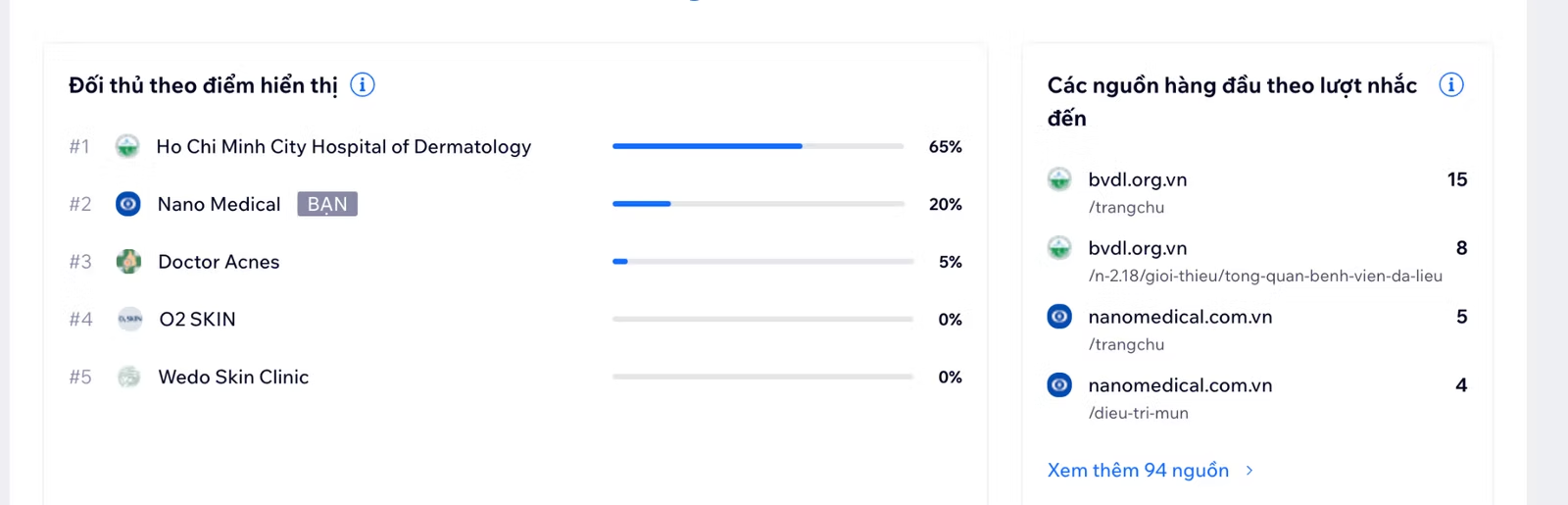
Where Are Businesses Losing Visibility in AI Search?
Google indexing is an important foundation, but it does not prove whether a company's name appears in AI-generated answers. I begin by separating four issues that can be tested:
- The content exists, but retrieval systems cannot access it: robots.txt, firewalls, HTTP status codes, canonicals, noindex rules or JavaScript-only content may cause different crawlers to see different information.
- The business lacks a consistent identity: The brand name, industry, representatives, products and address are described differently on the website, contact pages and public profiles.
- There is plenty of content, but not enough evidence-backed answers: Service pages rely on slogans instead of explaining processes, selection criteria, specifications, responsible specialists and supporting sources.
- There is no measurable before-and-after baseline: A screenshot showing one ChatGPT mention cannot establish frequency, citation quality or changes relative to competitors across repeated tests.
My SEO, AEO and GEO Implementation Process
- 01
Audit Accessibility and Indexability
Check HTTP status, robots.txt, sitemaps, canonical tags, noindex, internal links, readable HTML and CDN/WAF settings. Compare browser results, Google Search Console and AI crawler access: successful retrieval does not mean the content has been cited.
- 02
Create Answers Based on Customer Buying Questions
Gather real customer questions and group them by industry, service, comparisons and selection criteria. Develop specialist pages with direct answers, verifiable product or service information, authorship, sources, FAQs and clear contact pathways.
- 03
Standardize Brand Entities and Trust Signals
Keep names, experts, companies, projects, contact information and genuine public profiles consistent. Add structured data that matches visible content, with links to relevant case studies and independent sources. Do not manufacture Wikipedia/Wikidata profiles or purchase fake mentions to simulate credibility.
- 04
Measure AI Visibility and Improve What the Data Shows
Run a fixed set of questions on available platforms, recording the date, context and cited sources. Report mentions, citations and recommendations separately; compare results over consistent periods and correct misleading answers at their source.
A 90-Day Plan With Concrete Deliverables
- 01
Days 01–30 · Audit and Establish the Baseline
Confirm the customer-journey question set, reference competitors, retrieval accessibility and initial results. Resolve technical issues that may block content discovery.
- 02
Days 31–60 · Strengthen the Content Foundation
Standardize priority service pages, the company overview, expert profiles, specialist FAQs and links to real case studies. Each page should have a clear purpose, verifiable sources and an appropriate call to action.
- 03
Days 61–90 · Reassess and Set Priorities
Repeat the original questions, document platform-by-platform changes, record mentions and cited sources, and decide which topics to improve, correct or discontinue.
Important: Ninety days describes the implementation and measurement plan. It is not a guarantee that AI tools will cite or recommend the brand within that period.
Measure AI Visibility With Evidence, Not Impressions
Use a consistent question set, market and timestamped measurement periods. Where available for the tested queries and locations, assess ChatGPT Search, Gemini, Perplexity and Google AI Overviews.
- Brand mention rate: Number of valid responses that correctly mention the brand / total valid tests.
- Citation rate: Number of valid responses citing the company's URL / total valid tests. A source citation is not an endorsement.
- Recommendation rate: Number of responses listing the company as a relevant option / number of queries explicitly asking for provider recommendations.
- Share of voice relative to competitors: The brand's share of mentions within the same question set, assessed alongside named competitors in the industry.
- Verification record: Save the platform, prompt, timestamp, market and language, complete response, source URLs, screenshots and assessment. Record queries that do not trigger an AI Overview separately.
Reporting principle: Each measurement describes a defined question set at a specific time. AI answers may vary between sessions. Without verified measurements, I do not publish invented success rates or present simulated data as client performance.
Real Projects and Supporting Materials
- OKITA Group · Industrial Electroplating B2B
The information architecture organizes products, applications, technical knowledge and FAQs so industrial buyers can find relevant solutions. This provides a foundation for retrieval audits and an AI-search question set tailored to B2B needs. Visit the project website.
- Nano Medical · Healthcare and Dermatology
Expert information and the consultation journey are organized around patient needs, specialist profiles and content review processes. This case illustrates how clear information sources enable visitors and search systems to cross-check claims. Explore the AEO/GEO testing demo.
- AI Lab & MarTech · Tools and Demonstrations
These tools show how AI can support content checks, technical tasks and marketing workflows. A demonstration illustrates functionality but does not replace measured AI Visibility results.
The two projects above are examples of content architecture and practical implementation. Citation and recommendation rates will only be published when supported by verified measurement logs and dates.
What Your Business Receives
- An audit of content accessibility, indexability and technical retrieval barriers.
- An industry-specific customer question set and a timestamped AI Visibility baseline and follow-up tracker.
- A prioritized optimization list based on search intent and the customer conversion journey.
- Updated content with verifiable claims, helpful FAQs and logical internal linking.
- Structured data that accurately reflects existing business information, specialists, services and content.
- Recurring reports separating brand mentions, citations, recommendations and next actions, rather than combining them into one vague score.
Frequently Asked Questions About AEO/GEO
How Are AEO and GEO Different From Traditional SEO?
SEO establishes the foundations for discovery, indexing and search visibility. AEO/GEO focuses on whether AI answer systems can retrieve content, mention a brand, cite its sources or list it as a relevant option. Both rely on sound technical SEO, genuinely useful content and verifiable evidence.
Can You Guarantee That ChatGPT or Gemini Will Recommend My Business?
No one controls the answers generated by independent AI platforms. What I can deliver is an audit, fixes to retrieval barriers, standardized content and brand profiles, and transparent measurement. Any appearance in AI answers must be documented, not assumed in advance.
How Soon Can We Tell Whether the Work Is Effective?
The first 30 days establish technical findings and baseline measurements. Optimization follows, with repeat testing against the same questions across the 90-day cycle. Indexing, citations and recommendations vary by platform and query; a measurement schedule is not an appearance guarantee.
How Is AI Visibility Calculated?
Record a fixed question set, target market and testing time. Mention rate counts answers containing the brand name; citation rate counts answers linking to its URLs; recommendation rate covers only questions asking for provider options. Keep evidence from every test for comparison.
Do We Need Special Schema or an llms.txt File to Appear in Google AI?
No. Google's guidance for AI Overviews and AI Mode builds on existing SEO practices and does not require a dedicated llms.txt file or AI-specific schema. Structured data remains useful when it accurately describes visible content; indexing or citation is not guaranteed merely by adding markup.
If AI Crawlers Can Access a Site, Will ChatGPT Cite It?
Not necessarily. Allowing access addresses only whether a resource can be requested. Citations depend on the query, the search system and which content is selected. Check robots.txt, CDN/WAF rules, access logs and actual answer citations separately.
Technical References
The principles of SEO for AI search features are informed by official documentation from Google Search Central — AI features and your website and Google — Optimizing for generative AI features. Official sources support the technical requirements; client-specific outcomes are measured and archived separately.
RELATED / MEDIA SOLUTIONS