Brand: LOLEM Clothing · Vietnamese women's designer fashion
Role: Marketing Leader · 2019–2020
Scope: Digital performance · Messenger conversion · Influencer and PR campaigns · Retail activation
Highlights: 24,951 messaging connections in six months · 0% block rate in the referenced Messenger report
01. Context: Growth Challenges for a Designer Fashion Brand
LOLEM Clothing is a Vietnamese women's fashion brand established in 2011. Its style centers on elegant, modern designs, with everyday and occasionwear collections. Its attention to fabrics, silhouettes and design helped the brand create a compelling product image and inspire shopping interest.
During my time as Marketing Leader (2019–2020), competition on Facebook in the fashion sector had become much more than a contest for attractive images. Ad costs, response speed, meaningful inquiries and the connection between online conversations and stores were critical to performance.
I set three operational priorities: turn attention into relevant messages, strengthen visual appeal through influencers and content production, and connect marketing investment with retail activity. Instead of running isolated promotions, I developed a more consistent journey from advertising to Messenger conversations and in-store experiences.
02. Strategy: Make Social Media a Measurable Consultation Channel
2.1. Messenger Conversion Pipeline — 24,951 Connections in Six Months
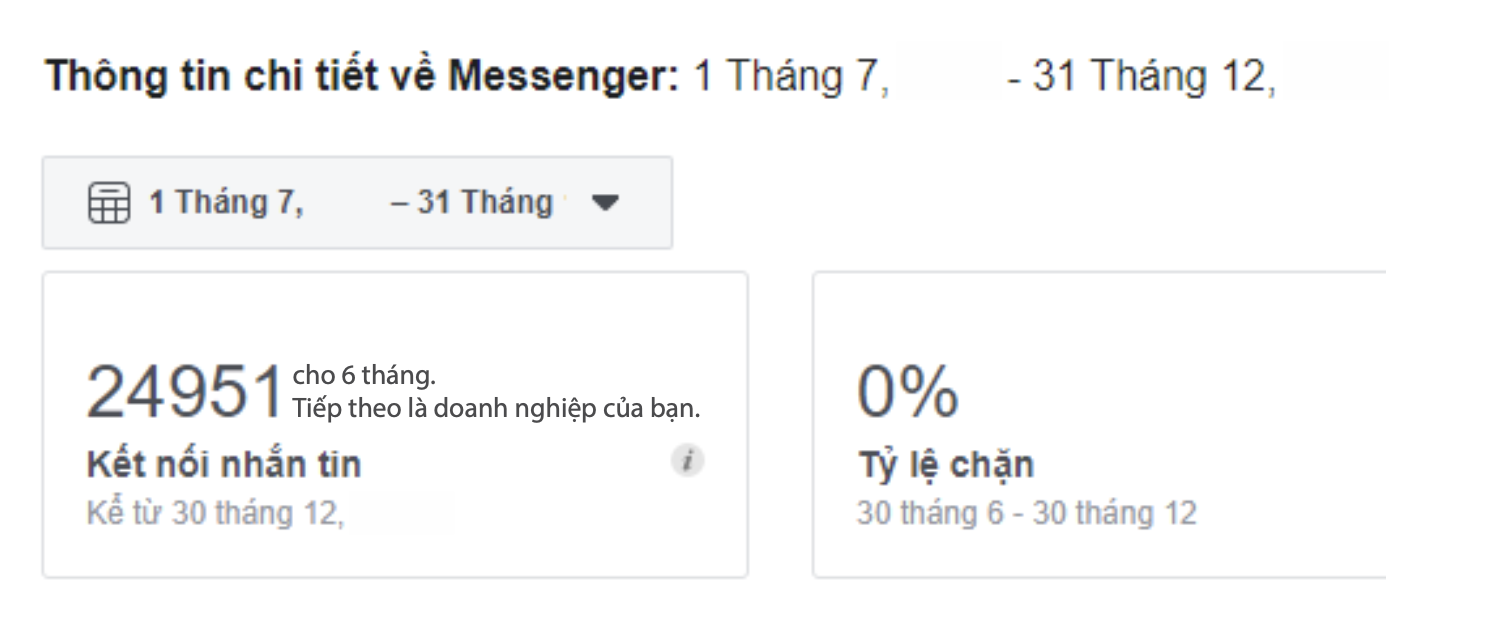
Key result: For the reporting period 01/07–31/12/2019, the brand's Messenger analytics recorded 24,951 messaging connections, with a 0% block rate within the scope of the captured report.
I organized advertising around real purchase motivations: choosing an outfit for a special occasion, finding workwear, selecting flattering designs or discovering new collections. Creative and copy encouraged people to ask about styles, sizes, prices and availability rather than scroll past.
- Segment customer needs: Differentiate officewear, eventwear, new-collection audiences and previous engagers.
- Conversation-oriented advertising: Pair relevant product imagery with a specific consultation prompt that brings viewers to Messenger.
- Coordinate customer consultation: Treat response quality and conversation experience as part of a shared Marketing–Sales workflow.
- Measure meaningful interactions: Track message connections, engagement trends and customer relationship continuity—not only post likes.
24,951 connections do not mean 24,951 purchases or completed orders. The figure demonstrates the ability to generate and monitor a substantial base of customer conversations that sales teams can continue to develop.
2.2. Influencer, Modeling and PR Collaborations — Turning Products Into Style Stories
For a designer fashion brand, aesthetic credibility comes from image quality, styling, talent partnerships and consistent brand language. I coordinated collaborations with models and influencers in beauty and fashion while organizing content production across media channels.
Rather than treat an influencer collaboration as a single paid post, I tied each partnership to collections, visual themes and a distribution plan. Photographs and footage could then support product communications, advertising and broader brand storytelling.
My responsibilities included coordinating concepts, choosing talent aligned with the brand, production scheduling, creative quality control and repurposing materials. I do not name specific artists or claim a number of partnerships without separate evidence for each campaign.
2.3. Marketing Budget and Retail Activation — Connecting Campaigns With Stores
Marketing for a retail chain cannot be judged only by the numbers shown in an ad dashboard. I helped manage budgets, communications and retail events with the goal of generating product interest and supporting an effective in-store shopping experience.
- Plan marketing around collection launches, sales programs and store activities.
- Coordinate digital spend, creative assets, influencers and events against a shared objective.
- Prepare promotional copy, store imagery, event schedules and on-site execution plans.
- Use customer feedback to adjust product priorities, messages and the approach in future campaigns.
2.4. Data-Driven Performance — Decisions Based on Customer Behavior
I used engagement data and campaign reports to identify content that generated meaningful conversations and to adjust resource allocation. The goal was not an attractive engagement dashboard but a sustainable system for generating demand and following up with interested customers..
Effective execution required coordination between creative, advertising, customer service and retail staff. This made Marketing a contributor to the customer journey rather than merely a content production function.
03. Actual Results and Supporting Evidence
- 24,951 messaging connections were recorded in Meta Messenger analytics between July and December 2019.
- A 0% block rate appears in the same reporting screenshot. It describes that report's scope, not the brand's complete history or a future guarantee.
- Content production and influencers: Coordinated fashion content, models and media partnerships to support awareness, advertising and sales.
- Retail marketing operations: Managed plans, budgets and events connected to the store network.
The Messenger figures come from an internal report image supplied by the portfolio owner. They are customer messaging and relationship metrics, not revenue, cost per acquisition or order counts without additional reconciliation.
04. Management Lessons: From a Delivery Team to a Growth-Oriented System
LOLEM helped me develop valuable experience at the intersection of three capabilities: performance marketing, fashion brand building and multi-touchpoint operational management..
I coordinated work across content, paid media, influencers, customer consultation and retail operations, maintaining delivery schedules and performance reviews. The work required people, budget, timeline and creative quality management—not campaign operation alone.
My contribution went beyond increasing message volume. I helped build a measurable marketing process that generated interest, tracked responses and brought prospective shoppers into a real consultation workflow.
05. References and Supporting Evidence
- Internal Messenger report (July 1–December 31, 2019): 24,951 messaging connections and a 0% block rate, shown in the image in section 2.1.
- LOLEM Clothing website — background on the brand, its design direction and shopping channels.
- LOLEM Clothing on Shopee — e-commerce channel.
- LOLEM Facebook page — the brand's social media channel.